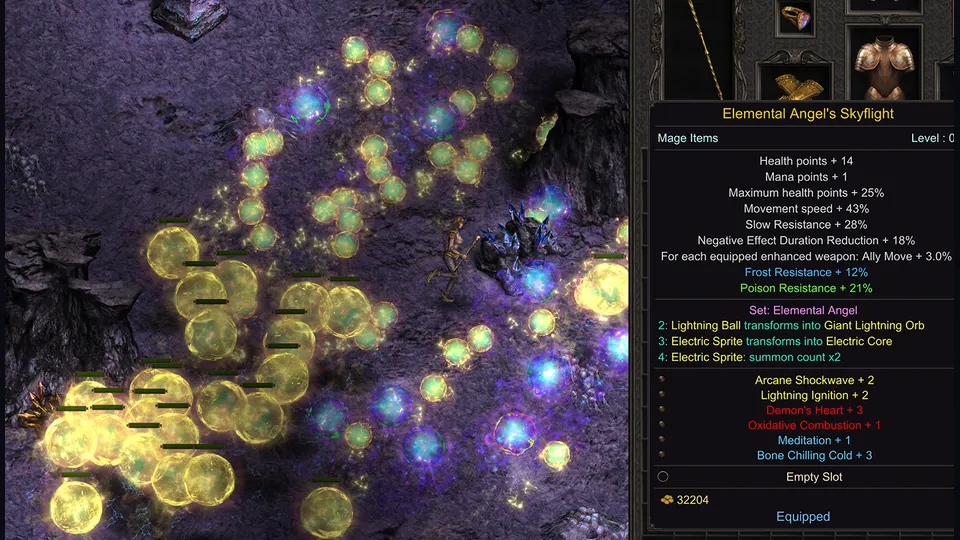
Shadow Dungeon drops so much gear that your first instinct is usually wrong.
You see a higher rarity, a bigger number, maybe a purple name, and think: upgrade.
Sometimes it is. Sometimes that shiny new staff quietly breaks the skill chain that was doing half your damage.
That is the real gear game here: not “pick the rarest color,” but figure out which item is helping the build happen.
The item pool is deliberately absurd
The Steam store advertises more than 100 million semi-random item combinations built from 3,200 base templates, and says more than half of equipment can carry additional skills that interact with talents.
The 1.0 equipment update adds another layer: 1,000+ weapon affixes split into five official categories — Basic, Special, Negative Effects, Skills and Summoning Skills — plus roughly 2,400 weapon-granted skills.
That is why two weapons with similar sheet damage can play completely differently.
What to read first on a new drop
When a pile of loot hits the floor, check it in this order:
- Does it boost a skill you actually use?
- Does it trigger another useful skill from that skill?
- Is the element helping your build or fighting it?
- Are the basic stats a meaningful upgrade?
- Does it belong to a set or enable a build-defining interaction?
That order is not a hidden formula. It is simply the fastest way to avoid replacing a good synergy item with a prettier piece of junk.
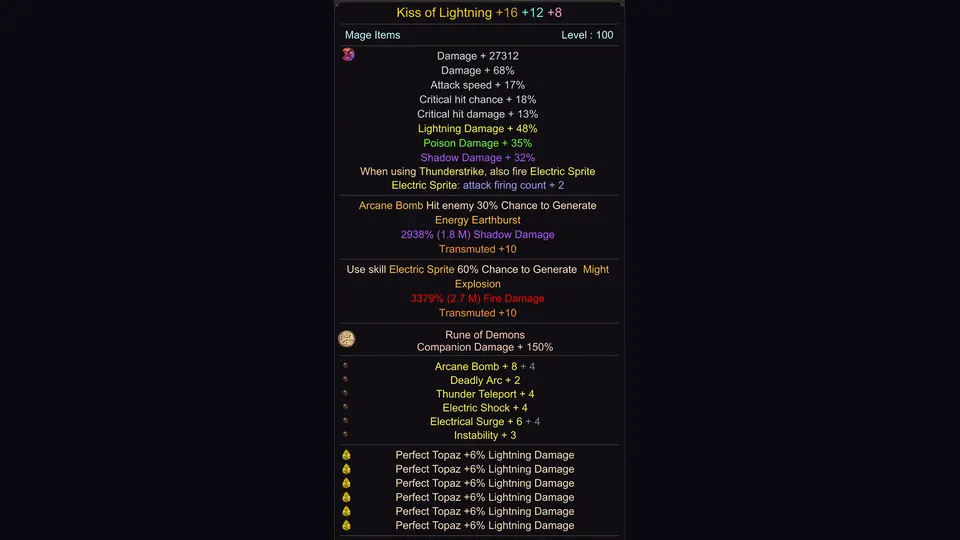
In launch-day Sorcerer footage, gear with +1 or +2 to active lightning skills was immediately noticeable. Items also rolled effects such as one skill having a chance to generate another. Those procs are where the screen starts turning into fireworks.
Skill text is often the real affix
One useful player complaint from the demo era was that item bonuses were hard to read because a bonus skill did not always make it obvious which base skill it modified.
That complaint makes sense once you see the full-release loot loop. A weapon can look mediocre until you notice it is adding levels to your main skill or chaining another effect from it.
So while leveling, do not speed-read the colored name and damage line only. Scan the skill text.
A practical keep-or-sell rule
Keep the item for a second look if it does one of these:
- adds levels to your main active skill
- adds a proc that triggers from your main skill
- adds the element you are building around
- gives a defensive layer you are currently missing
- belongs to a set you are actually testing
- changes the form of a skill in a way you can feel immediately
Sell or filter aggressively when the item is just a sideways stat shuffle for a class or element you are not using.
Reforging is what turns “almost right” into usable
The Blacksmith matters because good items do not always drop with the right elemental spread.
In full-release footage, the player repeatedly took useful gear with frost or physical elemental bonuses and rerolled those bonuses toward lightning for an Arcanist setup.
The important part: you are not rerolling the entire identity of the item. The tested reforging system changes elemental damage types/distribution while preserving the total elemental bonus amount. A separate skill-element reforge changes the element attached to certain extra skill effects without changing that effect’s numerical strength.
That means you can rescue a good item that is simply wearing the wrong color of damage.
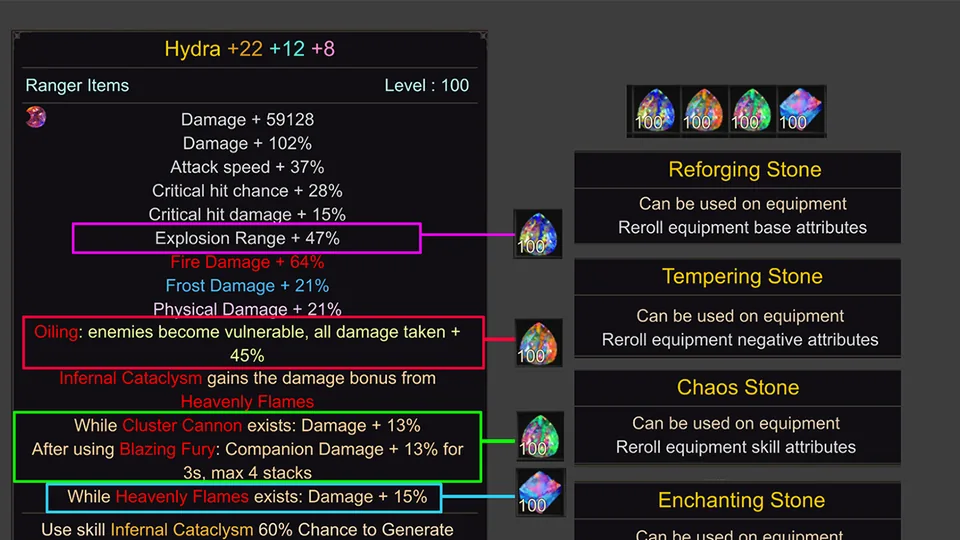
October 2026 added four named stones that reroll a specific slice of the item instead of hoping the next drop is cleaner: Reforging Stone for base attributes, Tempering Stone for negative affixes, Chaos Stone for skill affixes, and Enchantment Stone for a 10% shot at one extra skill affix. That is a different tool from the blacksmith elemental reforge. The Steam post also says items now remember the dungeon difficulty and tier they came from, and Ascension Stones take those bonuses into account. Full player-facing breakdown is on the October 2026 update.
Set items: powerful, but do not invent a “best set” yet
Official 1.0 notes say every class has 15 different sets, and that most sets include affixes that alter skill forms.
That is enough to say sets matter.
It is not enough to publish a fake table of “S-tier set names, 6-piece bonuses and exact drop locations” one day after launch.
Right now, the useful way to treat a set drop is:
- read what it changes
- test whether it improves your actual core skill
- use the DPS Tester if the interaction is hard to eyeball
- keep alternatives in storage instead of dismantling everything immediately
The game gives you a huge warehouse for a reason.
How to test whether a weird proc is actually good
- Remove one variable at a time.
- Hit the DPS Tester with your normal skill setup.
- Put the item on.
- Watch whether the granted effect actually triggers often enough to matter.
- If the item depends on getting hit, remember the DPS Tester can attack you and trigger counterattack effects.
That last point is official. The tester is not just a harmless dummy.
Rarity still matters — it just is not the whole answer
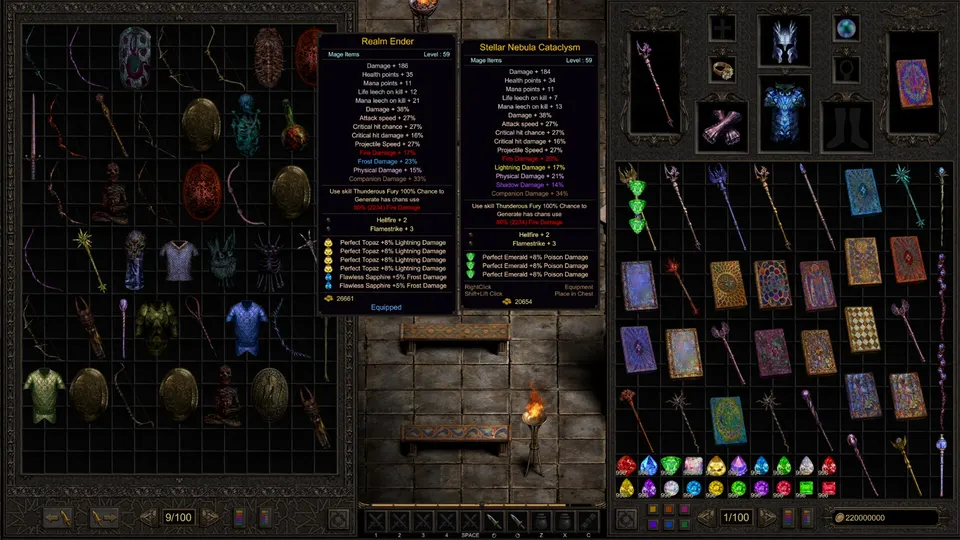
Higher-quality gear tends to deserve attention because the whole loot system is built around powerful affixes and skill interactions. But launch footage also showed the player constantly stopping to compare drops because color alone did not tell the full story.
A lower-looking item with the right +skill, trigger or elemental alignment can be more useful than a fancier drop that belongs to another build.
So yes, use the loot filter. Just do not set it so aggressively that you stop seeing the pieces your character still needs.
The leveling version of “best in slot”
During the campaign, “best in slot” usually means:
the item that makes your current build kill faster without turning you into paper.
You are replacing gear constantly. Save the spreadsheet mentality for the point where your build has stopped changing every twenty minutes.
For a Lightning Sorcerer, for example, the tested priorities naturally became skill levels, lightning-aligned bonuses, useful lightning-related procs, penetration and enough defense to stop getting punished by bosses and traps.
That is a real build direction. It is more useful than pretending we already know the perfect Inferno gear list.