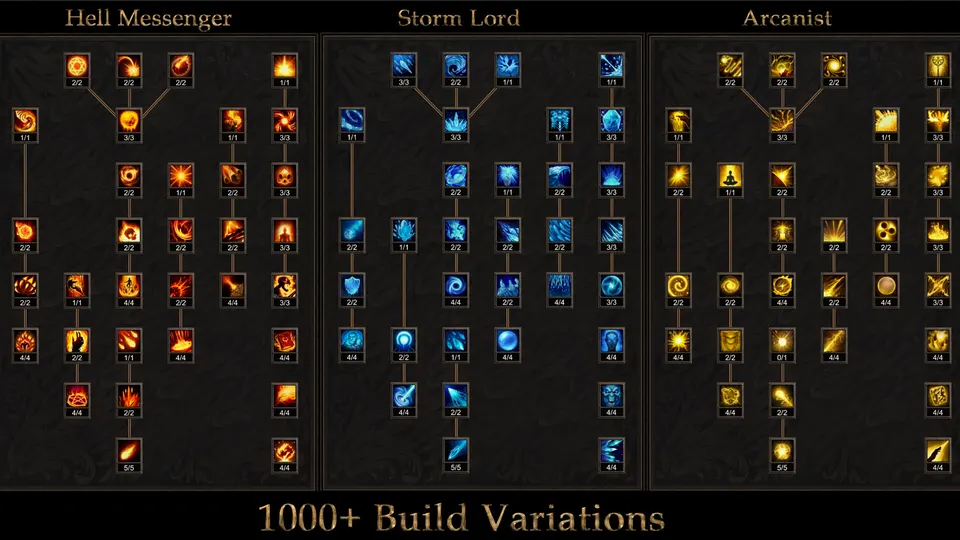
The talent screen looks like the kind of thing that can ruin an evening if you approach it with the wrong mindset.
There are 12 class trees and 370+ skills, gear can throw even more skills into the mix, and the store advertises unlimited skill points for long-term progression. It is very easy to stare at all of that and think you need a finished endgame build before you spend point number two.
You do not.
The better way to play Shadow Dungeon is to make one idea work first, then widen the build once the game actually gives you a reason to.
The structure: four classes, three trees each
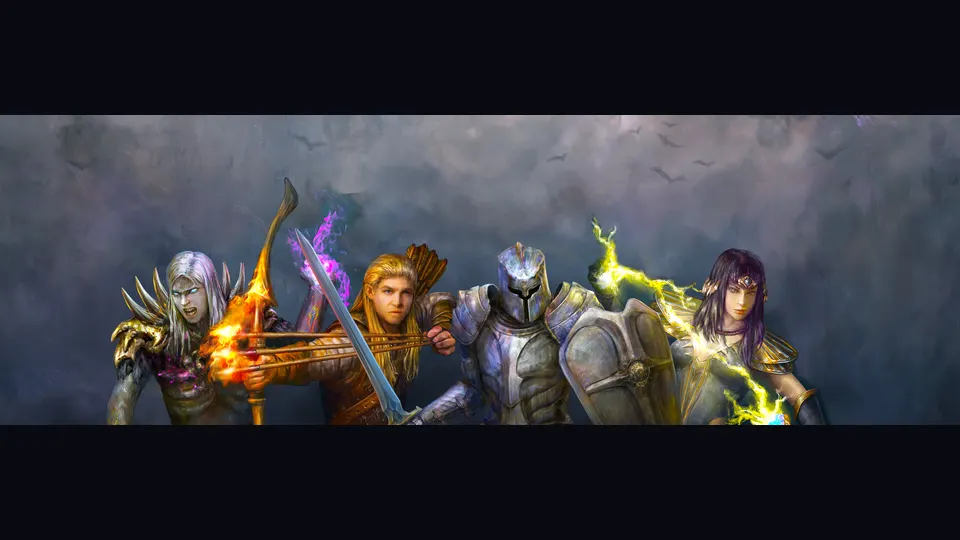
The launch classes are Sorcerer, Holy Warrior, Archer and Necromancer. The official total is 12 talent trees, so each class has three class trees before the later Paragon layer.
The store only gives broad class identities:
- Sorcerer: elemental magic
- Holy Warrior: dual blades
- Archer: precision ranged combat
- Necromancer: demons and skeletons
That broad wording matters because several launch-week guide pages have already filled the gaps with very specific tree names and skill rotations that are not in OO Cat’s published material.
We are not doing that here.
One class we can name from full-release footage: Sorcerer
A fresh full-release Mage/Sorcerer character shows these three paths in the actual talent UI:
- Hell Messenger
- Storm Lord
- Arcanist
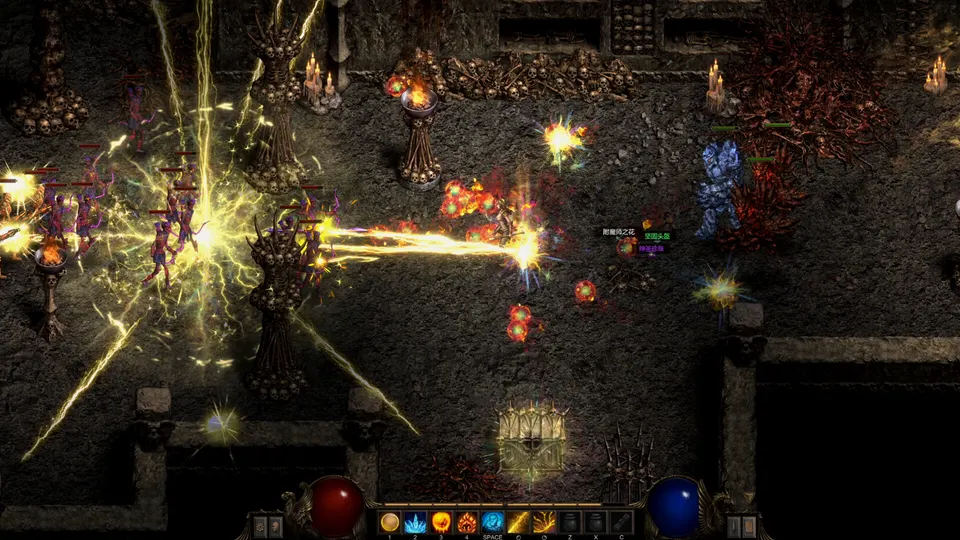
The player chose Arcanist and immediately built around Lightning Ball, then expanded into lightning-focused defense, mobility and larger cooldown skills as levels came in.
What should you spend points on first?
Pick one active skill that feels good to press and make it reliable.
That sounds almost too basic, but it solves two early problems at once: you get a real attack on your bar, and you stop scattering points across things that never appear in the same fight.
A sensible early order is:
- unlock the active skill you actually want to use
- take the nearby upgrades that make that skill hit harder, fire more often or solve a real survival problem
- add one defensive/mobility tool when enemies start punishing you
- only then start spending into a second idea
This is not a universal hidden formula. It is a way to keep your first 10–20 levels coherent.
Do not confuse “unlimited skill points” with “everything is good immediately”
The Steam store explicitly advertises unlimited skill points for advanced hybrid builds later on.
That does not mean every tree should be half-filled during the campaign.
Early on, a focused build is easier to gear because you know what you are looking for. If your damage is lightning, then a drop with lightning-aligned bonuses, skill levels or useful lightning procs has an obvious job. If your points are spread across five unrelated effects, every item comparison becomes harder.
Respec exists, so experimenting is not a character-ending mistake
In tested full-release footage, the Merchant sells a Forgetfulness Potion that resets talent skills.
Patch 1.0.1 also fixed a bug where pinnacle talents were not properly cleared after a respec. That is useful confirmation that resetting a tree is part of the live system, not a demo-only trick.
So if a branch feels awful after ten minutes, reset it. You do not need to protect every skill point like it is a one-time quest reward.
Transformation skills and pinnacle talents are real — exact build rules still need care
Patch 1.0.1 specifically mentions:
- a fix for transformation skills not taking skill points correctly
- a fix for pinnacle talents remaining after respec
That proves those systems exist in 1.0.
It does not give us a complete list of transformation skills, their breakpoints or the best pinnacle path for every class. Any page claiming a perfect table without showing the current client needs a second look.
What happens at level 100?
Normal character level caps at 100. After that, the official 1.0 progression adds:
- Paragon Levels
- a Paragon Talent Tree
- further attribute progression
The campaign is tuned to finish near 99–100, so Paragon is something you meet around the same time Greater Rifts become relevant.
Think of it as a new post-cap layer, not a fourth tree inside your class.
A good rule for deciding when to branch out
Ask one question:
What problem am I trying to fix?
If the answer is “bosses live too long,” add damage or a better single-target interaction.
If the answer is “I keep dying to traps and elites,” add defense or movement.
If the answer is “trash packs already disappear,” do not spend five points making trash packs disappear slightly more impressively just because a guide told you to.
That sounds obvious. ARPG talent screens have a way of making obvious things look complicated.
Why gear changes the talent decision later
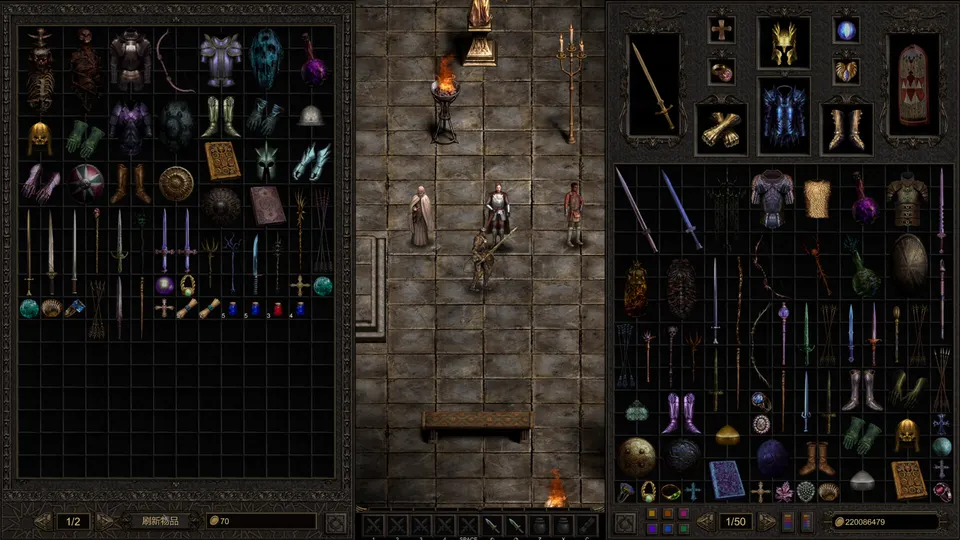
Shadow Dungeon’s equipment can grant skills and trigger other skills. The 1.0 update documents more than 1,000 weapon affixes and roughly 2,400 weapon-granted skills.
That means the best late-game point can depend on what your weapon is already doing for free.
A drop that repeatedly generates a useful effect from your main skill may make one branch suddenly worth investing in. That is where hybrid builds start becoming interesting — after the character has enough gear and points to support the interaction.
What we are not publishing yet
We are deliberately holding back:
- a universal “best talent tree” ranking
- exact Holy Warrior/Archer/Necromancer tree names that have not been current-client verified
- perfect level-by-level paths for all four classes
- Inferno meta breakpoints
- claims that one class can take another class’s trees
Those are exactly the kinds of details that become convincing nonsense when a new game has been live for one day.
For now, build one clean idea, use respec when it stops working, and let the current client tell you what the next point is actually solving.